Bioinformatics, AI and Data Science
Bioinformatics Series in Botswana · 2026
🗓️ 16 and 17 July 2026
⏰ 08:30 – 16:30
🏨 Cresta Hotel, Somora Drive, Gaborone, Botswana
🤝 Hosted by BHP and the Harvard T.H. Chan School of Public Health
Overview
This two-day workshop will prepare you to bring bioinformatics, AI, and data science to bear on real biological questions — and, just as importantly, to recognise when they don’t apply.
More than 4,000 people applied to join this workshop. 100 were selected for in-person participation, drawn from across all sectors, with a further 600 attending virtually.
Who is it for?
Anyone working with data in health and disease who wants a foundation in bioinformatics and data science — and a working awareness of what AI can and cannot do for their research. No command line experience necessary; some data analysis in R is a plus.
Research scientists · Medical practitioners and clinicians · Laboratory scientists and technologists · Postgraduate students (MSc, PhD) · Undergraduate students in the life sciences · Molecular biologists · Virologists and immunologists · Epidemiologists · Public health professionals · Biostatisticians and data analysts · Data managers · Early-career bioinformaticians · Clinical research staff and study coordinators · Pharmacists and pharmacologists · Lecturers and academic staff
Prework
Two things before you arrive:
Complete the PreAssessment. It takes a few minutes and tells us who is in the room.
Install the software. Bring a laptop with R, RStudio, and the Day 2 tools (AliView, IQ-TREE 3, FigTree 1.4.4, BEAST 1.10.5) already installed — see Installation for step-by-step instructions.
Mr. Sabone runs a setup session at 9:00 on both mornings, but the downloads are large and conference wifi is not. Arriving with software installed will save you an hour and let you spend it on the science instead.
If you have a dataset and a question from your own work, bring those too.
Schedule
Day 1: Multi-OMICS, Machine Learning and AI Ethics
Thursday 16 July 2026
| Time | Session | Facilitator |
|---|---|---|
| 8:30 – 8:45 | Registration and Welcome Remarks | Prof. Catherine Koofhethile |
| 8:45 – 9:00 | Introduction and Overview of the Course & Materials | Dr. Malika Aid Boudries & Dr. Choga |
| 9:00 – 9:45 | Installation of Applications / Software | Mr. Sabone |
| 9:45 – 10:15 | Tea Break | |
| 10:15 – 12:45 | Multi-OMICS profiling in HIV using advanced ML techniques Includes proteomics + metabolomics integration; short breaks throughout |
Dr. Malika Aid Boudries |
| 12:45 – 13:45 | Lunch | |
| 13:45 – 14:45 | AI in Medical Research and Ethical Considerations | Dr. Choga |
| 14:45 – 15:00 | Health Break | |
| 15:00 – 16:00 | Integration & Coding (Practical) & Course Evaluation | Dr. Choga |
| 16:00 – 16:30 | Certificates and Closing Remarks | Dr. Malika Aid Boudries, Dr. Choga & Prof. Catherine Koofhethile |
Day 2: Biomarker Discovery, Viral Evolution and Phylogenetics
Friday 17 July 2026
| Time | Session | Facilitator |
|---|---|---|
| 8:30 – 8:45 | Registration and Welcome Remarks | Prof. Catherine Koofhethile |
| 8:45 – 9:00 | Installation of Applications / Software | Mr. Sabone |
| 9:00 – 9:45 | Biomarker discovery using bulk RNA-Seq | Dr. Malika Aid Boudries |
| 9:45 – 10:15 | Tea Break | |
| 10:15 – 11:30 | Single cell multiome profiling in CD4 T cells in SIV-infected NHP | Dr. Malika Aid Boudries |
| 11:30 – 12:45 | SIV/HIV integration site profiling | Dr. Malika Aid Boudries |
| 12:45 – 13:45 | Lunch | |
| 13:45 – 15:15 | Principles of Viral Evolution (Bioinformatics) Using AliView + RStudio |
Dr. Choga & Dr. Malika Aid Boudries |
| 15:15 – 15:30 | Health Break | |
| 15:30 – 16:00 | Principles of Phylogenetics & Phylodynamics (Bioinformatics) Using IQ-TREE 3, FigTree 1.4.4, BEAST 1.10.5, RStudio |
Dr. Choga |
| 16:00 – 16:30 | Certificates and Closing Remarks | Dr. Malika Aid Boudries, Dr. Choga & Prof. Catherine Koofhethile |
Software
R · RStudio · AliView · IQ-TREE 3 · FigTree 1.4.4 · BEAST 1.10.5
All are free and open source. See Installation.
Instructors
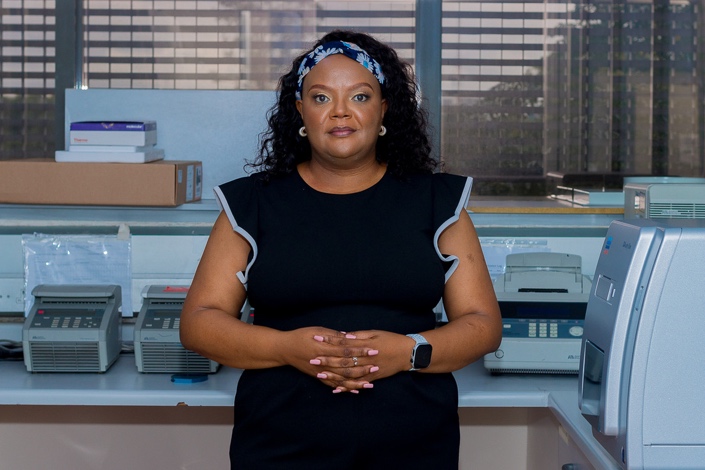 Prof. Catherine Koofhethile is an Organizer of this workshop and the Training and Development Manager at the Botswana Harvard Partnership, opening and closing both days. She is a Principal Research Scientist at BHP and Principal Investigator of the Phodiso study, a cohort of adolescents and young adults living with HIV, and holds an adjunct Professor position at the University of Venda, South Africa. She completed her postdoctoral fellowship at the Harvard T.H. Chan School of Public Health under Professors Shapiro, Essex, and Kanki, and is a visiting research fellow at the Ragon Institute of MGH, MIT and Harvard, working with Professors Mathias Lichterfeld and Xu Yu. Her research focuses on the genetic composition of the HIV proviral reservoir and the immune and other factors that drive HIV to persist long-term, including in Botswana adolescents receiving long-term ART, and she leads BHP’s efforts to establish an adolescent HIV cure research programme and to build capacity by co-mentoring junior researchers. Her work has been supported by Fogarty, Harvard CFAR, SANTHE, and the Povinelli and Campbell Foundations, among others, with current funding including the SANTHE Path to Independence and NIH-K43 Global Leader awards. She was recently named SANTHE Outstanding Contributor of the Year and shortlisted for the 2025 Nature Awards.
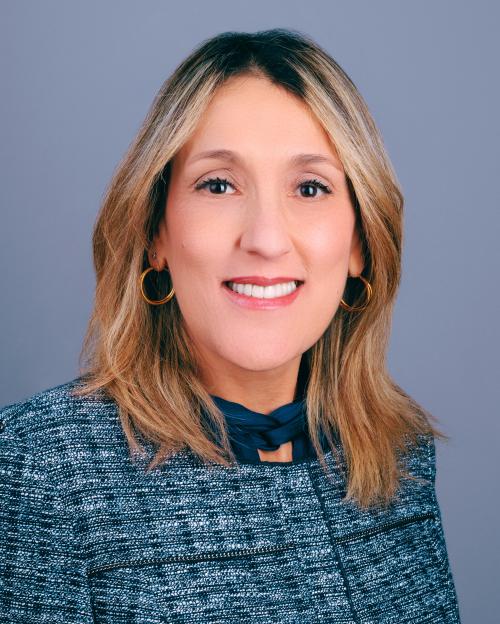 Dr. Malika Aid Boudries is the Invited Instructor for this workshop, leading the multi-OMICS and machine learning sessions. She is an Assistant Professor of Medicine and Principal Investigator at the Center for Virology and Vaccine Research at Harvard Medical School, where she leads research at the intersection of bioinformatics, OMICS technologies, artificial intelligence, immunology, and vaccine development. She serves as Director of the Harvard Center for AIDS Research (CFAR) Artificial Intelligence Committee, Director of the CFAR Pathways Initiative Program, and a core member of the CFAR Basic Research Committee. With an interdisciplinary foundation spanning an engineering degree in computer science, a master’s in immunology and molecular biology, and a PhD in computational biology, genomics, and bioinformatics, her work has advanced the understanding of high-priority pathogens — including Zika virus, SARS-CoV-2, HIV, H5N1 and seasonal influenza, and mpox — investigating viral persistence, immune evasion, host–virus interactions, and vaccine-induced immunity. She is Principal Investigator of an NIH Director’s New Innovator Award for work on host-dependent mechanisms guiding viral integration, and contributes to major NIH, Bill & Melinda Gates Foundation, and industry programs on broadly neutralizing antibodies, therapeutic vaccination, HIV vaccine innovation, and multi-omics immune profiling. She has authored more than 50 peer-reviewed publications in Nature, Science, and Cell across single-cell multi-omics, genomics, epigenetics, and the design of drugs and vaccines for emerging and persistent pathogens.
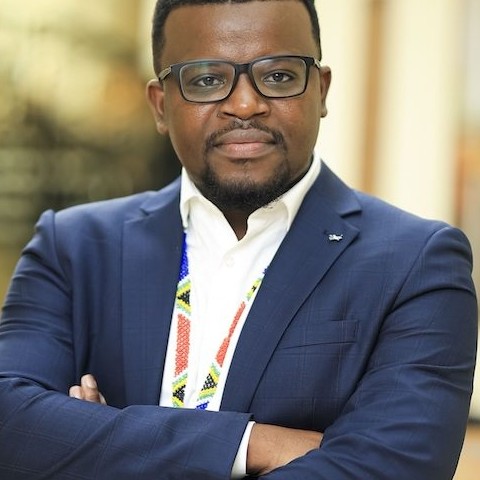 Dr. Wonderful T. Choga is Co-Organizer of this workshop and Instructor for AI. He holds a PhD in Medical Sciences (Pandemic Response) from the University of Botswana and an MSc(Med) in Human Genetics from the University of Cape Town. He is Head of the Bioinformatics Unit, Senior Bioinformatician, and Postdoctoral Research Scientist in Medical Virology at the Botswana Harvard Health Partnership, and serves as Adjunct Lecturer in Medical Virology and Bioinformatics at the University of Zimbabwe and Senior Lecturer in Bioinformatics at the National University of Science and Technology (Zimbabwe). A recipient of the Harvard Global Health Institute Fellowship and the Rockefeller Foundation–Africa CDC Public Health Fellowship, his research integrates artificial intelligence, pathogen genomics, phylogenomics, and genomic surveillance to advance precision public health across Africa. He has authored more than 70 peer-reviewed publications with over 3,500 citations (H-index 13), and is passionate about mentoring the next generation of African scientists.
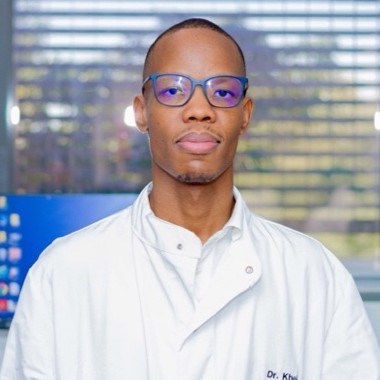 Mr. Phenyo Sabone is Co-Organizer of this workshop and serves as Health Informatics Officer, Data Manager, and Information Technology Professional at the Botswana Harvard Health Partnership. With over a decade of experience across health informatics, systems administration, biomedical research, and data management, he specialises in clinical and laboratory information systems, research data platforms, bioinformatics, and digital health solutions. He holds an MBA in Management Information Systems and a BSc (Hons) in Software Engineering with Multimedia. Previously a Senior System Administrator managing enterprise Linux infrastructure, virtualization, network services, cybersecurity, databases, and research computing, he now supports clinical and laboratory research by developing and managing electronic data capture systems, ensuring data quality, supporting bioinformatics pipelines, and integrating research information systems for HIV, genomics, infectious disease, and precision medicine research. He helps coordinate the scientific programme, technical sessions, and hands-on training for this course — and runs the software installation sessions on both mornings — while also supporting continental bioinformatics capacity building through H3ABioNet. His interests span health data science, AI in healthcare, bioinformatics, precision medicine, and digital health across Africa.
The Phodiso Lab provides the organising and coordination behind this workshop — logistics, scheduling, and participant support — led by Prof. Catherine Koofhethile at the Botswana Harvard Health Partnership.
See About for the full teaching team and our past workshops.
Partners & Sponsors
This workshop is hosted by the Botswana Harvard Health Partnership and the Harvard T.H. Chan School of Public Health, with the support of our partners and funders.
